
- 354 Views
- 3 Min Read
- (0) Comment
Growth Begins Where Comfort Ends
Comfort feels safe. Predictable. Reassuring.
However, for teenagers, staying too long in comfort can quietly limit growth.
Psychology indicates that development occurs when individuals face manageable challenges. Not overwhelming stress, but situations that require adaptation, effort, and emotional engagement. When structured and supervised, adventure provides exactly this kind of environment.
At Nomad Outdoor Division, we see adventure not as thrill-seeking but as a carefully crafted catalyst for psychological growth.
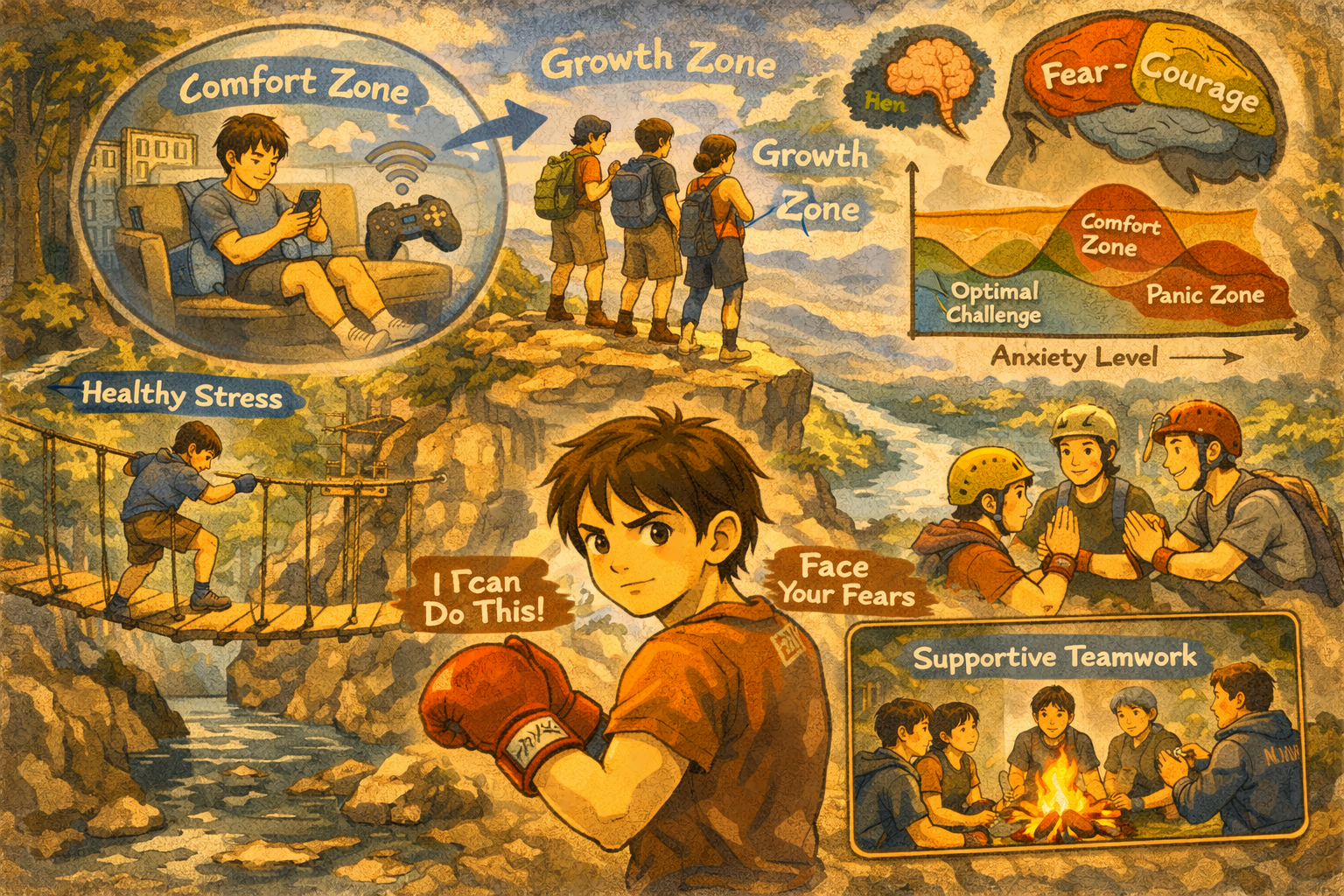
What the Comfort Zone Really Is
The comfort zone is not a physical place.
It is a mental state where routines are familiar and risks are minimal.
For teens, this zone often includes school routines, social roles, and digital environments they know well. While comfort offers stability, it provides limited opportunities for learning new coping mechanisms.
Venturing outside this zone introduces uncertainty—precisely where learning begins.
Stress Versus Healthy Challenge
Not all stress is harmful.
Psychologists distinguish between harmful stress and constructive stress. The latter occurs when challenges are temporary, supported, and within reach. Adventure-based experiences fall into this category.
Engaging in a new environment, facing physical effort, or adapting to cultural differences activates problem-solving skills and emotional regulation. Teens learn to respond thoughtfully, not react impulsively.
This process builds resilience and self-confidence.
Building Self-Efficacy Through Experience
One of the strongest psychological benefits of adventure is self-efficacy.
Self-efficacy is the belief that one can handle challenges and influence outcomes. It cannot simply be taught through advice; it must be experienced.
When teens succeed in unfamiliar situations, they internalise a powerful message:
“I can do hard things.”
This belief bolsters academic confidence, social resilience, and long-term mental wellbeing.
Emotional Regulation in Real Time
Adventure evokes emotional intensity.
Fear, excitement, frustration, pride—these emotions surface naturally during challenges. With guidance, teens learn to identify and manage them rather than avoid them.
They discover that emotions are temporary and manageable. This skill is vital during adolescence, a period marked by emotional fluctuations.
Courage Is a Skill, Not a Trait
Courage is often mistaken for fearlessness.
In reality, courage is the ability to act despite fear. Adventure teaches teens that fear is not a stop sign; it is information.
By repeatedly facing small fears within a supportive environment, teens gradually build courage. This courage extends beyond travel into everyday decisions and challenges.
Why Group Adventure Matters
Venturing outside comfort zones is easier with others.
Group adventure offers social reassurance. Teens observe peers confronting similar fears and progressing at their own pace. Encouragement and shared successes reduce anxiety and normalize vulnerability.
This collective experience fosters confidence and emotional safety.
The Role of Structure and Supervision
Adventure without structure can be overwhelming.
At Nomad Outdoor Division, challenges are intentionally designed. Safety, pacing, and emotional support ensure that teens are stretched, not pushed.
This balance is crucial. Growth requires challenge, but also trust and guidance.
Comfort Is Not the Goal
Comfort is useful. Growth is essential.
By stepping outside comfort zones through structured adventure, teens develop resilience, courage, and emotional intelligence. They learn how to face uncertainty with confidence rather than avoidance.
At Nomad Outdoor Division, we believe adventure is not about seeking risk; it is about creating the right conditions for teenagers to discover their inner strength.
Open the world. Expand perspectives.
Explore our programmes and discover how meaningful travel shapes young minds.